

Climate Variability and Prediction
CLIVAP division builds on CMCC climate models and tools to:
i) improve our understanding of the mechanisms underpinning climate variability, climate predictability and climate change ii) improve our understanding of the relationship between climate and extreme events iii) provide and improve CMCC operational climate forecasts from seasonal to decadal and multi-decadal time horizons iv) investigate long term climate projections v) collaborate with CMCC institutes to implement a model chain for impact predictions at different time horizons.
The division is structured in three main units: Climate Variability and Change (CLIVAP-CVC) unit and Decadal (CLIVAP-DEC) and Seasonal (CLIVAP-SEAS) Prediction units.
Within CLIVAP-CVC, the main aim is to improve our knowledge of the climate system (i, ii) also to identify internal relationships useful to the improvement of our CMCC operational forecasts maintained by the CLIVAP-DEC and CLIVAP-SEAS units. Within the prediction units, together with the operational forecast production (iii), new sources of predictability and the relative importance of model components and settings are investigated for the different time horizons. The prediction (iii) and projection (iv) products are made available, and tailored, based on the requirements of the impact community (v).
Contacts
Via C. Berti Pichat 6/2 - 40127 Bologna, Italy marco.vannini@cmcc.it
Research Units
Climate variability and Change
Leader Enrico Scoccimarro
Within CLIVAP-CVC, the main aim is to improve our knowledge of the climate system (i, ii) also to identify internal relationships useful to the improvement of our CMCC operational forecasts maintained by the CLIVAP-DEC and CLIVAP-SEAS units.
Decadal prediction
Leader Panos Athanasiadis
The CLIVAP-DEC prediction unit: - conducts research on topics related to climate predictability with a focus on ocean–atmosphere interactions; - produces decadal predictions operationally (WMOLC) and contribute to WCRP international modelling experiments (DCPP, EPESC); - analyzes ensemble predictions employing innovative methods to improve their skill assisting the development of climate services.
Seasonal prediction
Leader Leone Cavicchia
Operations Officer: Antonella Sanna
The CLIVAP-SEAS prediction unit: - investigates sources of climate predictability at the seasonal scale, with a focus on extreme events; - produces operational seasonal forecasts, which are distributed through Copernicus and the WMO Integrated Processing and Prediction systems; - investigates novel methods aimed at increasing the skill of climate predictions, with a focus on applications based on AI.
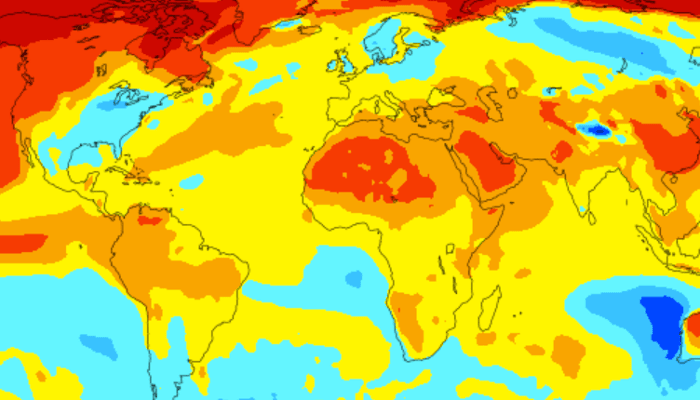
CMCC Seasonal Prediction System
The Euro-Mediterranean Center on Climate Change operates routinely a Global Seasonal Ensemble Prediction System (CMCC-SPS3.5) based on a Coupled Atmosphere-Ocean-Land-Cryosphere Global Model.
Models
CMCC-CESM-NEMO – Climate coupled model
The CMCC–CESM–NEMO is the physical basis of the new CMCC Earth System Model (CMCC-ESM). It is a global coupled climate model derived from the NCAR coupled model CESM version 1.1.2 (Hurrell et al., 2013), where the ocean component is NEMO (Madec et al., 2012) rather than the NCAR ocean model.
Data
Near-term climate prediction for CMIP6
Decadal prediction experiments consist of 10-member ensembles of 5-year hindcasts, starting every second year from 1960 to the present, using historical radiative forcing conditions (including green-house gases, aerosols and solar irradiance variability), followed by SSP2-4.5 scenario settings for the future.